
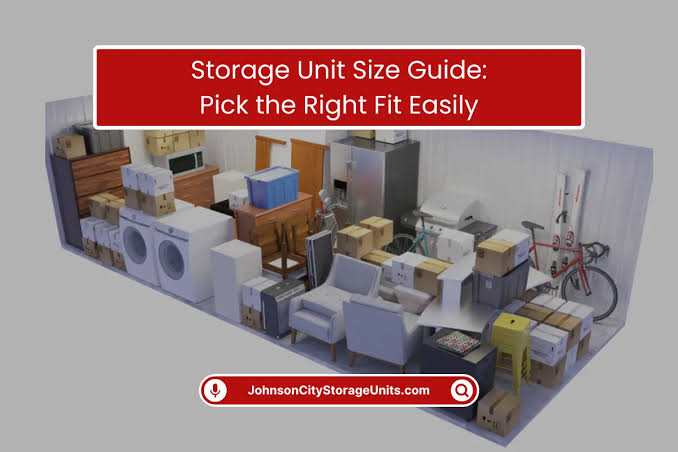
Storage decisions are rarely made with much time to spare. Whether someone is managing a household move, clearing space during a home renovation, or handling overflow inventory for a small business, the choice of unit size tends to get made quickly — often too quickly. The result is either a unit that runs out of space within weeks or one that costs more than necessary for the volume being stored. Both outcomes are avoidable, but only if the selection process starts with an honest look at what is actually being stored, how long it will be stored, and how access patterns will affect the way the space is used over time.
Rochester, MN presents its own set of practical considerations. The city has a strong mix of residential neighborhoods, medical professionals who relocate frequently, small business operators, and seasonal residents. Each of these groups approaches storage differently, and the needs within each group can vary considerably depending on circumstances. A general-purpose guide based on square footage alone tends to miss those distinctions. The goal here is to work through the actual decision-making process — not the simplified version that ends with a size chart.
Understanding What “Unit Size” Actually Means in Practice
When most people think about storage unit sizes, they picture floor space. That framing is incomplete. A storage unit has three dimensions, and how items stack vertically is often what separates a unit that works from one that feels too small after the first load. The usable volume of a unit depends on ceiling height, whether shelving is permitted or practical, and how well items can be organized during the loading process. Two units with the same floor square footage can have significantly different functional capacity depending on how they are packed.
For anyone evaluating rochester mn storage units, it helps to think in terms of how many distinct item categories are being stored rather than counting individual pieces. Furniture, boxes, appliances, and irregular items like bicycles or lawn equipment each require different types of space. A couch occupies floor space but allows for stacking above it. A refrigerator cannot have anything balanced on top without risk of damage. Mapping out these categories before selecting a unit size gives a more accurate picture of what will fit.
Facilities that operate across multiple unit configurations typically offer incremental steps in size. The difference between one tier and the next is meaningful in terms of monthly cost and available space. Selecting the wrong tier in either direction creates ongoing inconvenience — either from overcrowding or from paying for square footage that serves no purpose for the duration of the rental.
Why Item Density Matters More Than Item Count
Counting items before a move is a common approach, but it leads to poor estimates. What matters more is the density and stackability of those items. A household with forty boxes of books occupies a very different footprint than a household with forty boxes of linens, even though the item count is identical. Books are heavy, compact, and stack well but cannot be stacked too high without structural risk to the boxes. Linens are light, compressible, and take up more space per pound.
The same logic applies to furniture. Solid wood furniture tends to be dense and limited in how it can be repositioned. Flat-pack or modular furniture may be disassembled and stacked more efficiently. When assessing item density, the question to ask is not just how many things are going into the unit, but how many of them require dedicated floor contact and how many can be layered or stacked safely.
The Role of Access Frequency in Size Selection
A unit used for long-term archival storage is organized differently than one where items are retrieved weekly. When access is infrequent, items can be packed tightly with less concern for ease of retrieval. The priority is maximizing the volume stored within the selected unit size. When access is frequent — for example, a contractor retrieving tools regularly, or a small retailer rotating inventory — the unit must be organized to allow movement within it. That means leaving pathways, which effectively reduces usable capacity.
This distinction has a direct impact on size selection. Someone who needs to access items on a regular basis may require a unit one size larger than their item inventory would suggest, simply to maintain the ability to navigate the space. Failing to account for this tends to result in units where items end up stacked in front of other items, making routine retrieval time-consuming and physically difficult.
Matching Unit Size to Specific Storage Scenarios
Different storage needs have recognizable patterns, and understanding those patterns makes size selection more predictable. Rather than starting with abstract square footage ranges, it is more useful to work from scenarios that reflect real operational or life circumstances. Each scenario has characteristic item types, volume expectations, and access requirements that point toward a specific class of unit size.
Residential Moves and Transition Storage
Residential moves in Rochester often involve a gap between move-out and move-in dates. During that period, an entire household’s contents may need to be stored, sometimes for weeks, sometimes for months. The scope of a full household move typically includes furniture from every room, kitchen contents, clothing, and personal items. That volume generally requires more space than most people initially estimate.
The common mistake in this scenario is sizing based on the number of rooms in the home rather than the actual volume of contents. A small two-bedroom apartment with minimal furniture and few possessions has a very different storage footprint than a two-bedroom home that has been occupied for fifteen years and accumulated a full inventory of appliances, seasonal items, and stored materials. Room count is a rough proxy at best. A more reliable approach is to walk through each area of the residence and assess the volume of contents systematically before selecting a unit size.
Business and Operational Storage
Small business operators in Rochester use storage units for a range of purposes — seasonal inventory, equipment that is not in active rotation, document archives, and materials related to specific projects. The needs here differ from residential storage in one important way: the contents and volume tend to shift over time rather than remaining static.
A business storing inventory may need more space during peak season and less during slow periods. Selecting a fixed unit size based on peak need may result in paying for underused space during off-peak months. Some operators address this by renting smaller units and adjusting arrangements as needed, though this introduces logistical friction. According to the U.S. Small Business Administration, operational cost management is one of the most consistent challenges facing small businesses, and storage costs, while modest individually, become meaningful when they are misaligned with actual need over an extended period.
Medical and Healthcare Relocation Storage
Rochester’s medical community generates a specific type of storage demand. Healthcare professionals who relocate to the area, including those completing residencies or fellowships, often need temporary storage that can accommodate a furnished living situation for an extended duration. These renters tend to store complete household setups — furniture, electronics, kitchen items — while transitioning between housing arrangements.
This scenario is distinguished by the combination of volume and duration. The unit needs to hold a meaningful amount of content and hold it well, often for a year or more. Climate considerations become relevant here, not just size. Items stored for extended periods in extreme temperature conditions may sustain damage regardless of how well they were packed. A unit that is appropriately sized but poorly suited to Rochester’s seasonal temperature ranges can still result in losses.
Common Sizing Mistakes and How They Happen
Most sizing errors follow recognizable patterns. Understanding why they occur is more useful than simply listing what to avoid.
The most common error is underestimating volume during the planning phase. This happens because people tend to visualize items in their current context — spread across a home or office — rather than compressed into a single enclosed space. Items that feel scattered and manageable in a house look very different when consolidated into a unit where vertical space is the only direction available for expansion.
A second common error is failing to account for items acquired after the initial size decision. Someone who selects a unit based on current inventory may continue adding items over subsequent weeks without adjusting for the additional volume. Storage units tend to accumulate contents rather than shed them, particularly when they are being used for household transition purposes.
• Selecting unit size based on room count rather than actual volume creates a mismatch between expectation and reality once loading begins.
• Ignoring access needs leads to units that become progressively harder to use as items are stacked to maximize capacity.
• Failing to consider the duration of storage may result in a size choice that works initially but becomes inadequate as additional items are added over time.
• Overlooking the impact of irregular items — bicycles, exercise equipment, large appliances — which require dedicated floor space and cannot be stacked.
• Choosing based on price alone without evaluating whether the selected size can realistically accommodate the intended contents.
Practical Steps Before Committing to a Unit Size
A more deliberate approach to size selection reduces the likelihood of needing to transfer units after moving in. That process — moving items from one unit to a larger one — is time-consuming and physically demanding. Avoiding it is worth the additional effort invested before signing a rental agreement.
Conducting a Pre-Storage Inventory
Walking through the items to be stored and recording them by category and approximate volume is the single most effective preparation step. This does not require precise measurements. The goal is to identify the broad categories of items, note which ones are large or irregular, and estimate how many standard boxes or comparable containers will accompany the larger pieces. That inventory becomes the basis for a more informed size conversation with a facility representative.
Building in a Buffer
When an inventory assessment suggests a specific unit size, selecting the next size up is a reasonable default for anyone storing more than a minimal collection of items. The cost difference between adjacent unit sizes is typically modest compared to the operational disruption of running out of space. For businesses and individuals storing items over extended periods, the buffer also accommodates the items that tend to be added after the initial load.
Closing Thoughts
Choosing the right storage unit size is not a complicated decision, but it is one that benefits from a structured approach. The most common problems — units that are too small, units that become impossible to navigate, units that cost more than necessary — all trace back to the same source: making the size decision based on assumptions rather than an honest assessment of what is being stored, how it will be organized, and how the space will be used over the full duration of the rental.
Rochester’s storage market includes a range of rochester mn storage units across different configurations and price points, which means there is generally a practical option available for most situations. The work of finding the right fit belongs to the renter, not the facility. Taking the time to conduct a real inventory, think through access needs, and build in a reasonable buffer produces a storage arrangement that functions reliably over time — which is the only outcome that actually matters once the unit is locked and in use.
