
Managing a commercial lease portfolio is not a passive function. It involves continuous tracking of critical dates, financial obligations, landlord communications, lease clause interpretation, and compliance requirements that shift with every renewal, amendment, or new location added to the portfolio. For many organizations operating across multiple sites, the administrative weight of this work accumulates quietly until something goes wrong — a missed option window, an overbilled operating expense, or an audit that uncovers years of inconsistent record-keeping.
At that point, the conversation about outsourcing becomes less theoretical and more urgent. But outsourcing this function is not simply a matter of handing over a spreadsheet. The decision carries real operational risk, and the quality of a provider matters in ways that are not always visible during the evaluation process. Before any agreement is signed, there are specific things every organization should examine, demand transparency on, and verify independently.
Understanding What Lease Administration Outsourcing Actually Involves
When organizations consider lease administration outsourcing, there is often an assumption that it functions like general data management — someone else maintains the records, sends reminders, and files documents. In practice, the work is considerably more involved. A qualified provider is responsible for interpreting lease language, tracking financial obligations with precision, managing landlord correspondence, and maintaining an auditable record of every action taken on each lease in the portfolio.
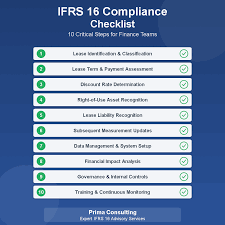
Lease administration as a discipline is governed by both legal and accounting standards. Under IFRS 16, for example, most leases must be recognized on the balance sheet, which means the data maintained by an outsourced provider directly affects how financial statements are prepared and reported. This connection between operational lease data and financial reporting creates accountability that not every provider is prepared to handle.
The scope of what a provider manages should be defined clearly before any engagement begins. This typically includes:
• Critical date tracking for renewals, expirations, break options, and rent escalations
• Rent and operating expense reconciliation against lease terms
• Landlord billing audits to identify overcharges on common area maintenance and other pass-throughs
• Documentation management and version control for lease amendments and correspondence
• Reporting and dashboard access for internal stakeholders across real estate, finance, and operations teams
Understanding this scope is the starting point for any evaluation, because a provider who cannot clearly articulate what they manage — and how — is unlikely to manage it well.
The Provider’s Process Is More Important Than Their Technology
Most lease administration providers will present a software platform as a primary selling point. The platform matters, but it is the process built around that platform that determines whether the work gets done accurately and consistently. Technology can organize data, but it cannot catch a missed clause in an amendment or flag a landlord billing error without a trained analyst reviewing the output.
How Work Actually Moves Through the Operation
A provider should be able to describe, without hesitation, how a new lease gets abstracted from document to database. This process typically involves an initial review of the original document, followed by structured data entry, peer review, and a quality check before the record is marked final. If a provider cannot describe these steps in concrete terms, the absence of a defined process is itself a signal worth taking seriously.
The same applies to how changes are handled. When a lease is amended, how is the existing record updated? Who performs the review? Is there a formal amendment log that tracks what changed and when? These are not administrative details — they are the difference between a portfolio that produces reliable data and one that produces inconsistencies that compound over time.
How Errors Are Caught and Corrected
Every provider makes mistakes. The question is whether the operation is designed to catch and correct them before they reach the client. A mature provider will have internal audit procedures, reconciliation routines, and escalation paths that do not depend on the client to identify problems. If the quality assurance structure relies on client review as the primary error-detection mechanism, that is an important limitation to understand before signing.
Data Security and Access Controls Are Not Optional Disclosures
Lease portfolios contain sensitive financial and legal information. The terms of individual leases — including rent amounts, co-tenancy provisions, exclusivity clauses, and termination rights — are often confidential. When this data is managed externally, the organization is trusting a third party with information that could create real problems if exposed or improperly accessed.
What a Provider Should Be Able to Demonstrate
Before any contract is signed, a provider should be willing to produce documentation on how they store, access, and protect client data. This includes where data is hosted, what encryption standards are used, who within the provider’s organization has access to specific records, and how access is revoked when a project ends or a staff member leaves the organization.
Role-based access controls are standard in any responsible operation. If a provider cannot confirm that access to client data is restricted based on job function and need, that is a structural gap worth investigating. The same applies to offboarding procedures — organizations should ask explicitly how their data is returned and deleted at the end of an engagement.
Transition Planning Determines Whether Outsourcing Actually Works
One of the most overlooked aspects of evaluating a lease administration provider is how they handle the transition from the organization’s existing systems. Whether the current process is managed internally or by a different provider, moving lease data to a new platform carries risk. Records can be incomplete, abstracts may not reflect the most recent amendments, and critical dates may have been tracked inconsistently over time.
What a Competent Transition Plan Covers
A structured transition should include a data audit before any migration begins. This means the provider reviews the existing records against the original lease documents to identify gaps, inconsistencies, or errors before assuming responsibility. Without this step, the provider inherits whatever problems already exist and simply moves them to a new system.
The transition plan should also include a defined period during which both the outgoing process and the new provider run in parallel, allowing for comparison and verification. The length of this overlap depends on portfolio size, but the principle applies regardless of scale. Organizations should also ask how the provider handles leases that arrive incomplete or with missing documentation — because in most portfolios, some will.
Service-Level Commitments Should Be Specific, Not General
A service agreement that uses phrases like “timely delivery” or “accurate reporting” without defining those terms is not a service agreement — it is a statement of intent. Before signing, organizations should negotiate specific, measurable commitments for the activities that matter most to their operations.
The Areas Where Specificity Matters Most
Critical date alerts are one area where vague commitments carry the most risk. A missed renewal option or an unexercised termination right can result in a lease extending for years at unfavorable terms, and it can happen even when a provider is technically delivering “alerts.” What matters is how far in advance those alerts are delivered, what escalation happens if no action is taken, and how the provider documents that notification occurred.
Operating expense reconciliation timelines are another area worth defining. Landlords typically issue CAM reconciliations annually, and a provider should commit to a specific review period after documents are received. If that review takes too long, the window for disputing charges may close under the terms of the lease itself.
Reporting frequency, response time for inquiries, and escalation protocols for discrepancies should also be written into the agreement with enough specificity to be verifiable. If a provider resists this level of detail, that resistance itself communicates something about how they operate under pressure.
Evaluating the Team, Not Just the Company
Proposals and presentations are typically delivered by sales representatives or senior leadership. The work, however, is done by lease analysts, accountants, and project coordinators who may have very different levels of experience. Before committing to a provider, it is worth asking who specifically will manage the portfolio and what their background includes.
This is not about demanding perfect credentials — it is about understanding whether the people doing the day-to-day work have enough exposure to commercial leasing to handle the complexity of the portfolio in question. A provider managing retail leases in multiple states, for example, should have analysts who understand the structure of those agreements, including percentage rent clauses, co-tenancy provisions, and landlord audit rights.
Asking to speak with the assigned team before signing is a reasonable request. A provider who is confident in their people will accommodate it. One who is not may find reasons to defer.
Closing Thoughts: The Checklist Is a Conversation, Not a Form
The items described in this article are not a bureaucratic exercise. They represent the kinds of questions that, when answered well, give an organization confidence that the provider can do the work as described — and when answered poorly, reveal structural gaps that are unlikely to improve after the contract is signed.
Outsourcing lease administration can meaningfully reduce internal workload, improve data accuracy, and bring discipline to a function that is easy to deprioritize. But those outcomes depend entirely on the quality of the provider and the clarity of the engagement structure. Organizations that approach this decision with rigor — asking hard questions, requesting specific commitments, and verifying the process behind the platform — are far more likely to experience the benefits that outsourcing is supposed to deliver.
The due diligence done before signing is not overhead. It is the work that determines whether the partnership functions when it matters most.
