
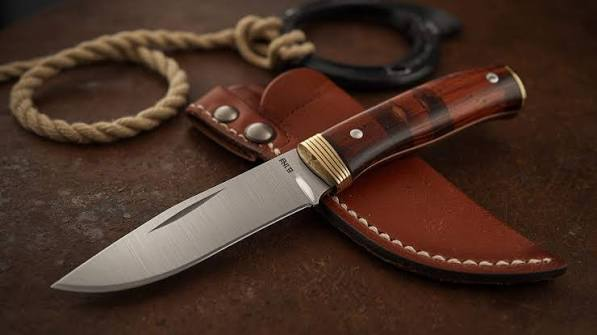
Some knives are crafted for everyday tasks, while others carry a timeless story. Cowboy knives fall into the latter category. Inspired by vast landscapes, the rigors of ranch work, and the independent spirit of the American West, these knives represent far more than mere blade sharpness. They blend traditional craftsmanship with a rugged identity that continues to captivate collectors, outdoor enthusiasts, and admirers of unique design.
Today, the appeal of cowboy knives extends well beyond the old frontier. Modern designs fuse Western character with contemporary materials, carving out a new niche for this traditional blade style within the worlds of outdoor gear and collectible art. Their popularity stems from a unique blend of history, character, practicality, and visual appeal.
Cowboy Knives: Carrying the Spirit of the Frontier
The image of the American cowboy is inextricably linked to wide-open spaces, hardworking ranching communities, and a lifestyle rooted in self-reliance. In such an environment, a reliable knife was an essential tool for daily use rather than a mere decorative accessory. These knives served to cut rope, handle routine ranch chores, prepare provisions, and tackle a host of other common tasks.
It is this working heritage that helped shape the identity of the cowboy knife. Its appeal grew from its utility, comfortable grip, and straightforward construction—free from excessive ornamentation. Although historical designs varied by region and purpose, these Western-style knives became an instantly recognizable symbol of a life far removed from the hustle and bustle of the city and modern comforts.
Modern interest in these knives also reflects a desire to reconnect with traditional craftsmanship. In a world saturated with mass-produced goods, an item inspired by the craftsmanship of the American frontier can feel deeply personal and meaningful. These knives embody a culture that values a relaxed lifestyle and manual skill—a world where a tool proves its worth through everyday use.
Why Cowboy Knives Still Captivate
The most compelling designs often possess an instantly recognizable character. Traditional Western knives may feature distinctive elements such as curved handles, unique blade shapes, leather sheaths, or materials that develop a richer character with age. These details set them apart from the sleek, industrial aesthetic of many contemporary cutting tools.
For collectors, cowboy knives offer an intriguing balance of function and aesthetics. Traditional wooden handles provide a visual warmth distinct from polished bone-style materials, textured synthetic grips, or darkened steel. Subtle variations in finish and construction mean that two blades seemingly identical at first glance can feel remarkably different in the hand.
Their cultural influence is also significant. Western films, historical exhibitions, ranching traditions, and country-style fashion have all helped preserve the cowboy knife’s image in the public consciousness. Even those who have never visited a working ranch likely recognize its silhouette, as the knife frequently appears in stories of frontier life.
Yet, appearance alone does not define quality. Handle comfort, blade alignment, material consistency, assembly precision, finish, and sturdy construction are all crucial factors. A visually stunning knife can disappoint if the details are poorly executed, whereas a simpler design can earn high praise thanks to meticulous craftsmanship.
Damascus Knives Offer a Distinctly Dramatic Flair
While Western styles often captivate through tradition, Damascus knives are admired for the dramatic patterns visible on their steel surfaces. The flowing lines along the blade can resemble wood grain, water ripples, or abstract art. These patterns give each masterfully crafted blade a unique visual character, particularly when contrasting layers are revealed through precise finishing techniques.
The name “Damascus” is linked to a long history of patterned steel, although modern products sold under this name are typically created by forge-welding multiple layers of steel together and manipulating them to produce distinct designs. While historical Damascus steel and modern pattern-welded steel are often conflated in the public eye, they are not necessarily identical materials or the products of the exact same manufacturing process.
This distinction is important because a striking pattern does not automatically guarantee superior performance. The quality of the steel itself, heat treatment, geometry, and the overall manufacturing process have a far greater impact on a blade’s performance. While a beautiful surface may catch the eye, true craftsmanship must go beyond mere appearance.
When Western style meets patterned steel, the result can be captivating. A handle inspired by the American frontier era, paired with a flowing blade pattern, unites two distinct design traditions. One element evokes a rugged historical identity, while the other presents a more artistic, contemporary visual character.
Cowboy Knives Meet Modern Craftsmanship
Traditional influences do not require modern knifemakers to replicate every historical detail exactly. Instead, contemporary craftsmanship often reinterprets familiar forms through the use of superior materials, refined finishes, and more consistent manufacturing standards. This creates room for innovation without losing the character that made Western knives instantly recognizable in the first place.
Modern cowboy knives can combine traditional-looking handles with stainless or carbon steel blades, updated fastening systems, and meticulously finished surfaces. Some designs are intentionally simple, while others feature decorative engravings, contrasting handle materials, or patterned steel for a more distinctive look.
Material selection affects both maintenance and appearance. Carbon steel can develop a natural patina and often requires careful drying and protection against corrosion. Stainless steel generally offers better corrosion resistance, although actual performance depends on the specific alloy and heat treatment applied. No single category is automatically the best choice for every situation. Handle materials also make a significant difference. Natural wood offers unique grain patterns and a warm aesthetic, whereas synthetic materials provide consistent dimensions and superior resistance to specific environmental conditions. The ideal choice depends on the intended use, construction quality, personal preference, and the level of maintenance the buyer is willing to undertake.
More Than Just a Tool: Collectibles with Character
The collectibles market adds another dimension to Western-style knives. Buyers may be drawn to limited production runs, maker’s marks, unusual handle materials, custom presentation cases, or designs linked to specific historical themes. For these enthusiasts, the knife becomes a piece of a personal collection rather than merely an ordinary household tool.
In this context, a cowboy knife can reflect the owner’s personal taste. One collector might prefer an understated design that emphasizes traditional proportions, while another might value intricate engravings and striking decorative finishes. Some appreciate evidence of skilled craftsmanship, whereas others focus more on the maker’s reputation, documentation, or consistency within a product series.
Authenticity is a crucial consideration when an item is marketed as an antique, handmade, or historically significant. Clear descriptions, trustworthy seller information, accurate condition details, and evidence of provenance can help buyers make informed decisions. A high price tag or a luxurious appearance should not be taken as absolute proof of historical value or exceptional quality.
Proper storage is also part of the owner’s responsibility. Knives must be kept clean and dry, protected from damaging moisture, and stored securely. Collectors should consider the specific requirements of the blade material rather than assuming that every type of finish demands the exact same maintenance.
An Evolving Western Legacy
The enduring appeal of cowboy-style knives stems from their ability to cater to a variety of interests simultaneously. These knives captivate those fascinated by the history of the American West, collectors who appreciate visual detail, outdoor enthusiasts who prioritize functional gear, and craftspeople drawn to the interplay between materials and design.
Damascus steel patterns add a new dimension to this appeal by demonstrating how steel can become an integral part of a blade’s visual identity. Yet, neither traditional profiles nor intricate patterns should distract from the importance of construction quality.
