
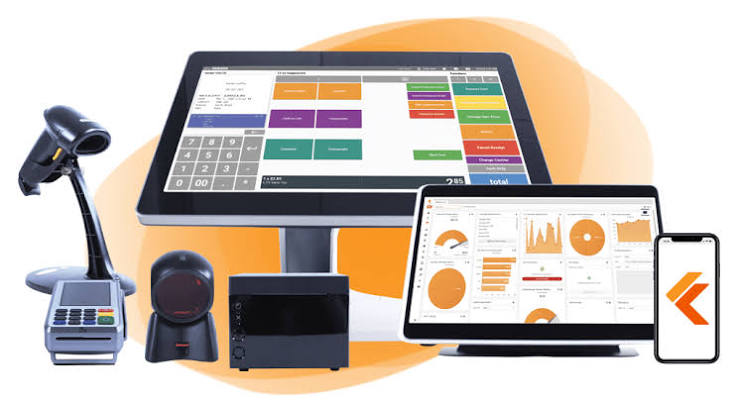
Running a thrift store is operationally different from running a standard retail location. Inventory arrives unpredictably, pricing is often done on the floor, donation intake needs tracking, and no two items are exactly alike. These conditions place specific demands on checkout and inventory systems that most general-purpose retail software was never designed to handle well.
Over the past several years, a growing number of US resale retailers have moved away from general retail platforms and toward software built specifically for the secondhand and nonprofit resale market. Their feedback, gathered through direct use across high-volume donation centers, charity thrift outlets, and independent resale shops, provides a practical basis for evaluating what actually works in this environment.
This article walks through seven of the most widely used point-of-sale platforms in the thrift sector as of 2025, evaluated not by feature checklists, but by how well each system holds up in real thrift store operations.
Why Thrift Stores Need Purpose-Built POS Software
Most retail point-of-sale platforms are designed around predictable inventory: items with barcodes, consistent quantities, and reorder cycles. Thrift stores operate outside those assumptions. Donated goods arrive in unpredictable volumes, items rarely have manufacturer barcodes, and pricing decisions are often made by individual staff members at intake rather than by a central purchasing team. A system that cannot accommodate that process will create friction at every stage of the operation.
When retailers evaluate pos systems software for thrift store environments, the decision criteria shift considerably from what a typical retail buyer would prioritize. Speed of item entry, the ability to assign custom pricing categories, donation receipt generation, and inventory management for non-barcoded goods all become baseline requirements rather than optional features. Platforms that meet those requirements specifically for resale are documented across US resale retailer networks, and resources like pos systems software for thrift store reflect how the industry has begun to standardize expectations around this specialized need.
The operational consequences of using the wrong software are concrete. Checkout slowdowns during peak hours affect customer throughput. Inability to generate donor receipts creates compliance exposure for nonprofit thrift operations. Poor inventory categorization makes it harder to identify which departments or item types are driving revenue. These are not abstract concerns — they are daily friction points that affect staffing decisions, volunteer management, and ultimately the margin that funds charitable operations.
Donation Intake and Inventory Are Inseparable in Thrift Operations
In a conventional retail environment, purchasing and inventory management happen before goods reach the floor. In a thrift store, the equivalent process — donation intake — happens continuously and in unpredictable volumes. Staff must assess, sort, tag, and enter items into the system as they arrive, often under time pressure and without standardized product data to work from.
Software that treats inventory as a procurement-driven function, where items are matched to pre-existing SKUs or supplier catalogs, simply does not fit this workflow. The best-performing systems used by US thrift retailers in 2025 treat item creation as a rapid, flexible process: staff can assign a price, select a category, and move an item to the floor in seconds, without requiring a lookup or barcode scan. That flexibility, multiplied across hundreds of intake decisions per day, has a measurable impact on labor efficiency and floor turnover speed.
The Seven Platforms Ranked by Resale Retailers in 2025
The following platforms appear most consistently in feedback from US resale retailers operating thrift stores at various scales, from small community shops to large nonprofit networks with multiple locations. Rankings reflect reported operational reliability, ease of staff training, and suitability for the thrift-specific workflow rather than overall retail market share.
1. Ricochet
Ricochet is built specifically for resale, consignment, and thrift operations. Its intake workflow allows staff to add items without barcodes, set pricing by category, and move goods to the floor quickly. Nonprofit thrift operators frequently cite its donor management module as a differentiator, particularly for organizations required to provide tax-deductible receipt documentation. Multi-location support is available, and the reporting tools are configured around thrift-relevant metrics such as category performance and donation volume over time.
2. KORONA POS
KORONA is a cloud-based platform that has seen increasing adoption in thrift environments due to its flexible item entry system and strong uptime record. It is not thrift-specific, but its open pricing structure and customizable categories make it adaptable. Retailers using KORONA in thrift settings report that the platform handles high transaction volumes without slowdown and that staff training time is relatively short. Its integration options with payment processors and reporting platforms are also frequently mentioned as operational advantages.
3. Square for Retail
Square for Retail occupies a particular position in the thrift market because it is widely accessible and low-cost to implement. Smaller thrift shops and community resale operations report using it effectively, primarily because of its simple interface and minimal hardware requirements. It lacks some of the thrift-specific features found in dedicated platforms — there is no native donor receipt generation, for example — but for operations that prioritize simplicity and low overhead, it remains a functional choice. According to the U.S. Small Business Administration, low-overhead technology adoption is a consistent factor in the sustainability of small nonprofit and community retail operations, which aligns with why Square retains its presence in this segment despite its general-purpose design.
4. ThriftCart
ThriftCart is purpose-built for nonprofit thrift stores and is one of the few platforms designed with charity retail compliance in mind from the ground up. It includes donor management, IRS-compliant receipt generation, e-commerce integration for online resale, and inventory tools adapted for donated goods. Larger thrift networks — particularly those affiliated with national nonprofit organizations — tend to favor ThriftCart because of its compliance features and the fact that it requires minimal customization to fit the thrift workflow. Staff and volunteer training is consistently reported as straightforward.
5. Lightspeed Retail
Lightspeed is a broader retail platform that has been adapted for use in thrift and resale environments, particularly by retailers who also operate an online sales channel alongside their physical store. Its inventory management depth is a strength — the platform handles large item catalogs well and provides detailed reporting that larger operations find useful for tracking performance across departments. The tradeoff is that Lightspeed requires more initial configuration to fit the thrift workflow, and the cost structure is higher than simpler alternatives. It tends to perform best in established thrift operations with dedicated staff for system management.
6. Shopify POS
Shopify POS has found a niche in thrift stores that operate as hybrid businesses — physical locations that also sell through an online storefront. The platform’s strength is its synchronization between in-store inventory and online listings, which is valuable for higher-value resale items that merit individual online listings. Pure brick-and-mortar thrift stores with no e-commerce component find less value in Shopify’s structure, but for operations running both channels, it reduces the friction of managing two separate inventory systems. The pos systems software for thrift store use case here is specifically tied to hybrid retail models rather than traditional thrift-only operations.
7. Clover POS
Clover is a hardware-and-software system that offers flexibility through its app marketplace. Thrift stores using Clover typically do so because of its hardware reliability and the ability to add functionality through third-party applications. It is not purpose-built for thrift, but it is stable and widely supported, which matters for operations that cannot afford downtime during business hours. The platform is most commonly found in smaller thrift stores where staff familiarity with consumer-facing technology makes Clover’s interface approachable without extensive training.
What Separates Functional Systems from Disruptive Ones in Thrift Environments
The distinction between a system that works in a thrift environment and one that creates ongoing friction often comes down to how the platform handles the unpredictability that defines thrift operations. Donated goods do not arrive on a schedule, and no two shifts produce the same intake volume or item mix. A system that requires consistent data inputs — standardized SKUs, supplier-matched items, or reorder points based on minimum stock levels — will generate errors and workarounds constantly in this context.
Staff and Volunteer Usability Is a Practical Requirement
Thrift stores, particularly those operating under a nonprofit model, rely heavily on volunteers and part-time staff who may not have prior retail experience. The usability of a point-of-sale system in that context is not a secondary concern — it directly affects checkout speed, intake accuracy, and the likelihood of pricing errors reaching the floor. Systems with complex onboarding requirements or interfaces designed for experienced retail staff tend to generate higher error rates and require more supervisory oversight in thrift environments.
The platforms that perform best across these conditions share a common characteristic: they minimize the number of required steps for common tasks. Adding a new item, completing a sale, issuing a donor receipt, and closing out a register should all be achievable by a new staff member with minimal instruction. That standard is more demanding than it sounds, and it is where several otherwise capable platforms fall short when applied to thrift-specific operations.
Reporting That Reflects Thrift Business Metrics
Standard retail reporting is built around supplier relationships, margins per SKU, and reorder performance. None of that applies in thrift. The relevant metrics in resale environments include donation volume by time period, category-level revenue, average transaction value by department, and throughput per staff member. Systems that produce those reports natively — without requiring custom configuration or data exports — give managers the information they need to make decisions about staffing, floor layout, and pricing strategy. That operational visibility, while often underestimated during the selection process, becomes significant over time.
Selecting the Right Platform for Your Thrift Operation
No single platform is the right fit for every thrift store. Scale, nonprofit status, the presence or absence of an e-commerce channel, and the level of technical capacity on staff all influence which system will perform best in a given context. What the rankings from US resale retailers consistently indicate is that thrift-specific or resale-adapted platforms outperform general retail software in the metrics that matter most to thrift operations: intake speed, checkout reliability, donor management, and staff usability.
The practical approach is to evaluate platforms against the specific friction points in your current operation rather than against a generic feature list. If donor receipt compliance is a daily challenge, that narrows the field considerably. If volunteer turnover means the system needs to be learnable in under an hour, that eliminates platforms with steep onboarding curves. If multi-location inventory visibility is a priority, that points toward cloud-based systems with strong reporting architecture.
Understanding what pos systems software for thrift store operations actually require — as distinct from what general retail software provides — is the starting point for making a selection that holds up over time. The market has matured enough in 2025 that thrift-specific options exist at multiple price points and scales, and the feedback from retailers who have already made this transition is specific enough to inform a grounded decision.
Conclusion
The thrift and resale sector has grown considerably over the past decade, and the software market serving it has responded with more focused, capable platforms than were available even five years ago. US resale retailers who have moved to purpose-built or resale-adapted pos systems software for thrift store operations consistently report improvements in intake efficiency, checkout speed, and reporting clarity compared to general retail software.
The seven platforms covered here represent the range of options available in 2025, from nonprofit-specific solutions with built-in compliance tools to adaptable general platforms used by hybrid retail operations. Each has a context where it performs well, and each has limitations that matter depending on how a specific thrift store operates.
The most reliable path forward is evaluating these systems against the actual operational demands of your store rather than abstract capability rankings. Staff usability, intake flexibility, donor management, and reporting relevance are the criteria that resale retailers return to most consistently when assessing what works. Those criteria, applied honestly to the platforms available today, will produce a clearer and more durable decision than any feature comparison alone.
