
For many Americans approaching retirement, the financial decisions made in the final decade of their working years carry more weight than almost any other period in their financial lives. Markets can move sharply in either direction. Inflation persists in ways that erode purchasing power quietly over time. And the traditional tools most people have relied on — 401(k) accounts, savings deposits, and basic insurance products — may not offer the combination of growth potential and protection that a ten-year runway demands.
In this context, a class of financial products that sits between conventional fixed annuities and the open exposure of equity markets has drawn increasing attention from financial planners and their clients. These products are not new, but the terminology around them has become more consistent, and the features more refined, over the past decade. Understanding how they work — and how they differ from other retirement vehicles — requires a clear look at the mechanics, not the marketing.
What a Structured Annuity Actually Is
A structured annuity is a contract between an individual and an insurance company that links a portion of your account’s growth to the performance of a market index, while placing a defined limit on how much of any loss you are required to absorb. The product is designed to give participants exposure to market-driven growth without subjecting them to the full downside that comes with direct equity investment. It occupies a middle position in the retirement product spectrum — neither fully protected like a fixed annuity, nor fully exposed like a variable product.
The core mechanism works around two parameters: a cap on the upside and a buffer or floor on the downside. If the index performs well, your account grows up to a defined ceiling. If the index declines, the product absorbs a portion of that loss before it touches your account balance. Understanding the full range of terms, payout structures, and index options available within this product category is worth exploring through detailed resources on the structured annuity market before making any contractual commitment.
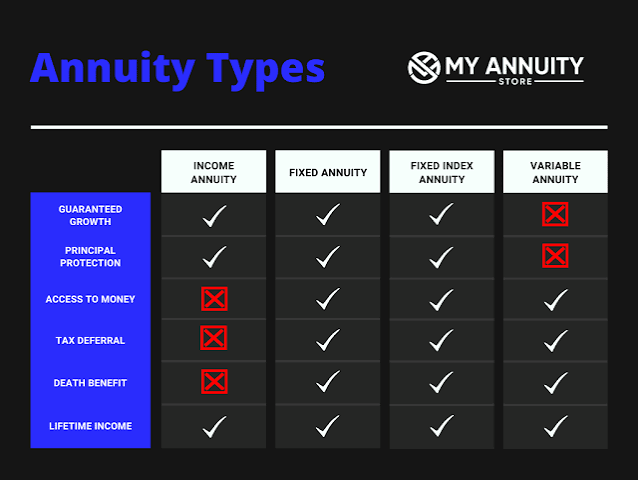
This structure is fundamentally different from a fixed indexed annuity, which typically offers full downside protection with a lower growth ceiling. It is also distinct from a variable annuity, which ties performance directly to sub-account investments without built-in loss limits. The structured product intentionally trades some protection for a higher potential ceiling, which is why it appeals to people who still have a decade or more of accumulation ahead of them.
How the Buffer Mechanism Works in Practice
The buffer is the most important feature to understand before entering into one of these contracts. A buffer defines the percentage of index loss that the insurance company will absorb before any loss is applied to your account. If the product carries a ten percent buffer and the index drops by eight percent in a given term, your account loses nothing. If the index drops by fifteen percent, you absorb five percent of that decline — the portion that exceeds the buffer threshold.
Some products use a floor instead of a buffer. A floor sets an absolute maximum loss for your account, regardless of how far the index falls. A product with a ten percent floor means you will never lose more than ten percent in a given term, even if the underlying index falls by forty percent. The tradeoff is typically a lower participation rate or a reduced growth cap compared to buffer-based products.
Neither mechanism eliminates risk entirely. They redefine and redistribute it. Understanding which structure fits your specific accumulation timeline and risk tolerance requires comparing the terms carefully across product offerings.
Why the Pre-Retirement Decade Creates Specific Needs
The ten years before retirement represent a financial period that is distinct from both the early accumulation years and the distribution phase that follows. During this window, a significant portfolio loss carries consequences that are difficult to recover from. A major market decline at age thirty-five allows decades for recovery. The same decline at age fifty-eight or sixty-one does not.
This asymmetry is well documented in retirement planning literature and is sometimes referred to as sequence-of-returns risk. The order in which gains and losses occur matters enormously when a portfolio is approaching the point of withdrawal. A person who experiences a thirty percent loss in the final three years before retirement faces a fundamentally different trajectory than someone who experiences the same loss early in their career.
Accumulation Without Full Market Exposure
Most people in their fifties and early sixties are still in an accumulation mindset. They are contributing to accounts, growing balances, and trying to maximize the value they carry into retirement. But they are also increasingly aware that a single severe market event could alter those plans permanently.
Structured annuities offer a way to remain in an accumulation posture — participating in index growth — while drawing a defined boundary around the worst-case outcome. For someone who cannot afford to lose thirty percent of their balance in a single market cycle, this boundary has real operational value. It is not about eliminating all uncertainty. It is about making the uncertainty manageable within a specific time horizon.
The Role of Accumulation Terms and Crediting Periods
These products typically operate on defined crediting periods — usually one, three, or six years — during which the index performance is measured. At the end of each period, gains or losses are calculated based on the index movement relative to the product’s cap and buffer terms. The account then resets for the next term.
This period-based structure matters for someone within ten years of retirement because it aligns with planning timelines. A person at age fifty-eight might use a series of three-year crediting periods to carry a portion of their portfolio into the early retirement years while keeping another portion in more liquid or conservative instruments. The crediting structure allows for intentional sequencing rather than passive exposure to market timing.
Common Misunderstandings About These Products
Several misconceptions tend to circulate around this category of annuity, most of them stemming from confusion with related products or from an incomplete reading of the contract terms.
The first common misunderstanding is that these products guarantee market-equivalent returns. They do not. The cap placed on gains means that in a strong bull market, a structured product will underperform a direct equity investment. The product is not designed for maximum growth. It is designed for managed growth with limited downside, which is a different objective entirely.
The second misunderstanding is that the buffer provides complete protection. As explained above, the buffer absorbs losses up to its defined threshold. Beyond that threshold, the account holder bears the remaining loss. Someone expecting full protection and receiving a product with a ten percent buffer may be surprised by losses in a severe market downturn.
Surrender Periods and Liquidity Constraints
Like most annuity contracts, structured products typically include a surrender period during which withdrawing funds early results in a penalty charged by the insurance company. These periods commonly range from several years to over a decade, depending on the product. For someone within ten years of retirement, this creates a liquidity consideration that requires careful planning.
It is important to ensure that the funds committed to a structured annuity are not funds that might be needed for unexpected expenses, healthcare costs, or early retirement shifts. This is not a product designed for flexibility. It is designed for accumulation with defined terms. Confusing those two objectives can create real financial difficulty when circumstances change unexpectedly.
The U.S. Securities and Exchange Commission has published guidance on indexed annuity products that outlines how surrender charges, cap rates, and participation rates interact — a useful reference point for anyone reviewing a contract before signing.
How to Evaluate Whether This Product Fits Your Situation
Not every person within ten years of retirement is a suitable candidate for a structured annuity. The product works best in specific circumstances that align with its structural strengths.
A structured annuity tends to make practical sense when:
• A portion of your retirement savings is earmarked for accumulation rather than near-term spending, giving you the ability to commit funds for the full crediting period without creating a liquidity gap.
• You have a moderate risk tolerance — meaning you are willing to accept some potential for loss in exchange for a higher growth ceiling than a fully protected product would offer.
• Your overall retirement portfolio includes other assets in more conservative or more liquid positions, so the structured product represents one layer of a diversified strategy rather than the whole plan.
• You have reviewed the specific index options available within the contract and understand how each index has historically performed across different market conditions.
• You are working with a financial professional who can walk through the exact terms of the contract, including the cap rate, buffer level, crediting period, and surrender schedule, before any commitment is made.
The product does not suit someone who needs full liquidity, expects to access funds within the surrender period, or requires guaranteed full protection of principal regardless of market conditions. For those needs, other products — fixed annuities, certificates of deposit, or short-term bond instruments — may be more appropriate.
Closing Thoughts
Structured annuities occupy a specific and legitimate role in retirement planning for Americans who are still in the accumulation phase but no longer have the time horizon to absorb a severe market loss without consequence. They are not a universal solution, and they are not a replacement for comprehensive retirement planning. They are a tool with defined mechanics, defined limitations, and real utility when applied in the right context.
For anyone evaluating these products, the most important step is reading the contract terms with the same care you would apply to any binding financial agreement. Caps, buffers, crediting periods, and surrender schedules each carry implications that affect the outcome of the strategy. Understanding those terms before committing — not after — is what separates a well-matched product choice from a frustrating financial experience.
Working with a licensed financial advisor who has direct experience with this product category is strongly advisable. The complexity is not insurmountable, but it does require someone who can translate the contract language into real-world scenarios relevant to your specific retirement timeline and financial position. The ten years before retirement are too consequential to navigate with incomplete information.
