
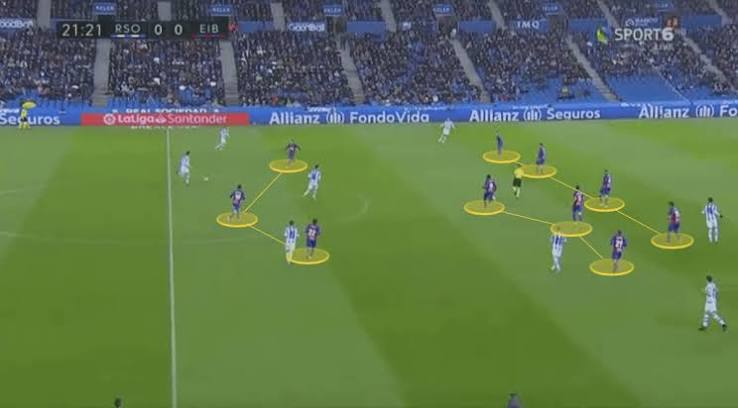
Using tactical reading to pick a betting side only becomes powerful when you can trace a clear line from the coach’s decisions to the match’s likely rhythm and probability distribution. In La Liga 2012/13, the mix of dominant possession teams and more reactive, compact sides created distinct tactical archetypes that repeatedly shaped chance creation, defensive fragility, and game state volatility across the campaign. By learning how to decode those coaching patterns before kick-off, you turn tactical knowledge from interesting background noise into a structured pre‑match filter that guides which side deserves your stake.wikipedia+1
Why the 2012/13 La Liga Context Matters for Tactical Reading
La Liga 2012/13 provides a clean laboratory for tactical reading because one team, Barcelona, ran away with the league on 100 points while the rest of the table showed large variation in goals scored, goals conceded, and approaches to controlling space. That asymmetry forced many coaches to decide whether to fight possession with possession, fall into deep blocks, or blend both, making their choices more visible in how their teams behaved against stronger and weaker opponents. The resulting patterns left tangible fingerprints on statistics such as goals against, away win frequencies, and heavy defeats, which you can connect back to tactical intent when interpreting future matchups.sbnation+1
In addition, research on La Liga across the 2012/13 to 2020/21 period shows that team formations and offensive sequences evolved toward more associative play with longer passing moves, but that shift coexisted with direct attacks and transitions as important tools. This duality means tactical reading cannot reduce to “possession equals attack, deep block equals defense”; instead, you must judge how each coach blended ball circulation, pressing, and verticality, because those blends ultimately determine shot quality and match tempo. The 2012/13 season sits at the early part of that evolution, making its tactical diversity especially useful as a reference.termedia+2
How Formations and Structures Reveal a Coach’s Risk Profile
Formations in La Liga during that era were not random decorations on a lineup board; they encoded how coaches balanced control, width, and transition risk. Studies of Spanish top-flight tactics from 2012/13 onwards highlight that shapes akin to 4‑2‑3‑1 and related variants were prevalent, while 4‑4‑2 and other systems remained common alternatives depending on the coach’s philosophy. A double pivot generally signaled a desire for extra central stability and protection in front of the defense, while a lone pivot with advanced interiors tended to indicate more ambitious positioning between the lines and a higher tolerance for counter-attacks.scribd+1
For pre‑match decisions, that structural choice becomes a proxy for how much volatility you can expect in both directions. A coach who consistently deploys a conservative midfield screen with limited forward runs will often produce matches where his team concedes fewer big chances but may also struggle to overload the opponent’s box, making narrow scorelines and low totals more plausible. Conversely, managers who send fullbacks high and push multiple players into advanced zones frequently improve their own chance creation at the cost of exposing spaces behind, raising the likelihood that both sides generate substantial xG even if one is nominally superior.jhk.termedia+1
Reading Offensive Intent: Possession, Verticality, and Final-Third Patterns
Offensive intent—how a coach wants his team to advance the ball and create chances—acts as a primary driver of whether you expect a controlled game or a swingy one. Work on La Liga’s offensive sequences over multiple seasons shows a trend toward longer, more associative passing moves, with teams constructing attacks through sustained possession rather than relying solely on isolated breaks. However, within that broader trend, individual coaches still varied in how quickly they asked their sides to progress, whether they targeted wide crossing zones or central combinations, and how they used set pieces within their scoring plan.substack+1
When you evaluate a 2012/13-era coach, you can translate those stylistic preferences into implications for odds. A manager whose team routinely strings together long passing chains but struggles to penetrate central areas may inflate possession stats without producing proportionate xG, which can make them appear dominant on basic metrics while being vulnerable to sharp, low-possession opponents. On the other hand, a coach whose side emphasizes direct forward passing and rapid entries into the box might generate fewer total passes but a higher proportion of dangerous moments, which supports wagers that depend on shot quality and fast transitions more than raw ball control.
Defensive Behaviors and Their Impact on Match Volatility
Defensive behaviors—pressing height, compactness, and how aggressively teams protect central zones—fundamentally shape how risky a match becomes. Analyses of La Liga’s tactical evolution emphasize that teams have become more organized in their defensive structures over time, optimizing how they close passing lanes and choose pressing triggers. Even in 2012/13, though, some coaches favored coordinated pressing higher up the pitch, while others prioritized compact mid or low blocks to compress space in front of their penalty area and slow the game down.barcainnovationhub.fcbarcelona+2
For a bettor, the causal chain runs from defensive decisions to the distribution of outcomes. High-pressing, high-line sides can force turnovers and create big chances but are inherently vulnerable to runs in behind, sometimes resulting in matches with wild swings and late-game collapses. More compact, low-block coaches often reduce the number of clear chances in their games, but they may pay a heavy price when chasing deficits, because their teams are less practiced at sustained attacking patterns. Recognizing which defensive profile a coach sits in helps you forecast whether the underdog is more likely to keep things tight or be dragged into an open, unstable contest.
Tactical Matchups as a Pre‑Match Decision Framework
Tactical matchups—how one coach’s intentions intersect with another’s—turn static profiles into dynamic game scripts that guide which side to back. When a structured, associative-possession coach faces an opponent content to absorb pressure and counter, the first question is whether the possession side’s rest-defense and counter-press can realistically suppress transitions. If past evidence from a season like 2012/13 shows that this coach’s teams struggled against fast breaks, you have a cause–effect path pointing toward the underdog having a stronger-than-expected scoring threat despite limited ball share.termedia+1
Conversely, when two coaches both favor cautious, positional play with limited risk from fullbacks, the likely outcome is a congested midfield, fewer high-value shots, and a higher probability that small details—set pieces, long-range efforts, or isolated errors—decide the match. In those fixtures, betting aggressively on heavy favorites at short prices may be less appealing than considering handicap lines or even contrarian positions if the market has overreacted to brand strength instead of tactical reality. The matchup lens keeps you focused on how plans interact, not just how each team performs in isolation.
Mechanisms That Turn Tactical Reading into Pre‑Match Edge
Turning tactical observations into edge requires mechanisms that connect qualitative insights with numbers the market must respect. One such mechanism is stability: if a coach in La Liga 2012/13 used similar formations, pressing ideas, and substitution patterns across most of the schedule, his matches likely showed recurring statistical shapes—average possession bands, shot counts, goal timings—that you can estimate with some reliability. That stability reduces uncertainty when you project how a new fixture will play out, which is critical when evaluating whether prices undervalue a dog’s ability to keep games close or an aggressive favorite’s chance of running up a margin.barcainnovationhub.fcbarcelona+1
Another mechanism lies in context dependence. Some managers adjusted tactics sharply based on opposition strength—pressing high against weaker sides but dropping deeper versus elite teams—while others remained philosophically consistent regardless of the opponent. In pre‑match analysis, recognizing whether the coach in question is context-sensitive lets you refine your expectations: a flexible manager might be more likely to close games down away to a strong rival, thereby lowering totals, whereas a stubbornly attacking coach could push into a high-variance game even when underdog. That difference in adaptability often determines whether replicating past patterns is reasonable or whether you should expect a different script.
Conditional Scenarios That Should Change Your Side Selection
Certain conditional scenarios should explicitly change how you treat a tactical read when choosing a side. If the underdog’s coach is known for disciplined deep blocks and quick counters, and the favorite’s recent performances have shown difficulty breaking compact defenses, you have a scenario where the market may have overstated the gap between them, making a +handicap or double‑chance position on the underdog more attractive. Here the cause is tactical misalignment between the favorite’s strengths and the underdog’s setup, the outcome is an increased likelihood of a close match, and the impact is a shift toward backing resilience rather than reputation.
On the other hand, if a middling side coached by a possession-oriented manager faces a relegation-threatened team that consistently leaks goals and struggles with defensive rotations, the same possession-heavy approach that sometimes looks sterile can lead to sustained pressure and multiple big chances. In that scenario, tactical reading might push you toward trusting the favorite more than recent form alone would justify, especially if data from past matches under the same coach show an ability to dominate weaker defenses. The conditional nature of these scenarios underscores that tactics are not static advantages; their value depends on which strengths and weaknesses they meet on the day.
Integrating Tactical Views with UFABET Pre‑Match Markets
Analytical work on tactics only becomes practically useful when it shapes the decisions you make in the actual betting environment where stakes are placed and odds are displayed. Pre‑match, you are constantly comparing your internal game script with the probabilities implied by offered prices, asking whether the tactical story you expect is already fully priced or still underappreciated. Under specific circumstances—when lineups confirm a continuation of known systems, when key tactical players remain available, and when the schedule suggests no extreme fatigue—you can treat your tactical forecast as a primary filter before you even scan all market options.
Within that process, it becomes relevant to consider how different operators react to information about tactics and lineups. An experienced bettor might observe that a betting destination such as ยูฟ่าเบท occasionally adjusts total-goal lines and handicaps in response to news that affects formations or pressing intensity, but that these moves are not always synchronized with broader market opinion. When your pre‑match tactical read predicts a slow, controlled game while prices still echo recent high-scoring results, the gap between your script and the posted numbers can indicate a window where backing unders or a narrower handicap has positive expected value until the inevitable line movements compress that edge.
Where Tactical Reading Fails for Pre‑Match Decisions
Even detailed tactical reading comes with failure points that you must accept and manage rather than ignore. One obvious issue is that red cards, early goals, and injuries can completely destabilize the planned structure, forcing coaches to abandon their preferred systems and making a carefully constructed pre‑match script irrelevant. In a season like 2012/13, teams fighting relegation or European places also faced psychological pressure that could push them toward desperate tactics not reflected in their usual patterns, increasing result variance at the worst possible time for those relying on historical tendencies.
Another problem lies in misinterpreting macro studies as micro guarantees. Research on La Liga’s evolution shows trends toward greater technical and tactical sophistication, but those aggregated findings smooth over the unique quirks of individual coaches, squads, and match contexts. If you assume that every team in that era behaved similarly because league-wide data show longer sequences or particular formation frequencies, you risk overgeneralizing and missing critical exceptions. The practical implication is that tactical reading must always return to team- and coach-specific evidence, treated as a living profile that can change, rather than as a fixed label drawn from a single study.semanticscholar+2
How casino online Environments Influence Application of Tactical Edge
The environment through which you actually get your bets down subtly reshapes how you apply tactical edges, especially before kick-off. When your primary access to markets is through a casino online website that emphasizes accumulator offers, featured boost coupons, and a fast, entertainment-focused betting journey, there is a structural pull toward high-variance, multi-leg selections that may not align with the relatively moderate edges tactical reading can provide. If your analysis of a 2012/13-style matchup suggests a slight undervaluation of a compact away underdog, the environment’s design may still nudge you toward combining that angle with several unrelated legs, diluting the impact of your carefully derived read on the coach.
From a cause–effect perspective, the way markets are presented and promoted influences which opportunities you notice, how much time you spend on specific fixtures, and whether you feel comfortable staking heavily on a single, tactically grounded opinion. The impact is that bettors who do not consciously separate tactical insight from environment-driven impulses often end up converting good analysis into poorly structured bets. Recognizing this interaction early lets you design routines—pre‑match checklists, isolated single bets, and disciplined stake sizing—that protect the integrity of your tactical edge inside a context that might otherwise encourage more impulsive decisions.
Summary
Using tactical reading of La Liga 2012/13 coaches to decide which side to back pre‑match is fundamentally about following a chain from coaching choices to game scripts and then to odds. The season’s mix of dominant possession teams and varied responses from the rest of the league, combined with research on the evolution of formations and offensive sequences, shows how structural decisions about shape, pressing, and offensive intent translate into stable patterns in chance creation and match volatility. By viewing fixtures through the lens of tactical matchups—rather than only through form tables or brand strength—you can better anticipate when the market has misread how a game is likely to unfold.
